
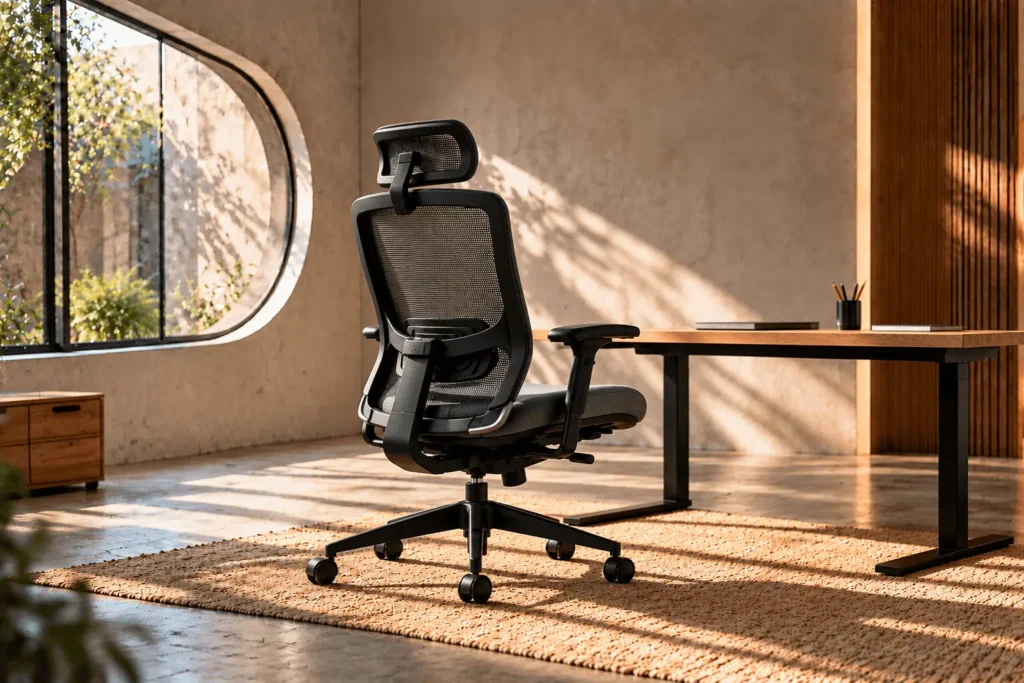
Best office chairs for tall people need to fit more than your overall height. Seat depth, seat height, backrest dimensions, armrest range and desk compatibility can all determine whether a chair actually works for a taller body.
A high maximum seat height is useful, but it is only one part of the decision. A chair can rise high enough and still feel cramped if the seat is too short, the backrest is poorly positioned or the armrests do not match your desk.
This guide explains the measurements and adjustments tall users should check before buying. Product recommendations will be added when verified canonical Product Commerce records and current retailer offers are available.
Why height alone is not enough
Two people with the same overall height can have different leg and torso proportions. That is why chair selection should consider several dimensions instead of using a single height range.
For a taller user, the first questions should be: Does the seat rise high enough for the desk? Is the seat deep enough for the thighs? Does the backrest accommodate the torso? Can the armrests reach a useful position?
Check the maximum seat height
A taller user may need a higher seat to establish a comfortable relationship between knees, feet and desk. Compare the chair’s actual maximum seat height with your workstation rather than relying on a label such as “tall chair.” Also check whether the desk itself is high enough for the chair setting you need.
OSHA: Computer Workstations — Chairs
Seat depth is a major tall-user consideration
Longer legs often make seat depth more important. You need enough seat surface to support the thighs while still leaving comfortable space behind the knees when sitting against the backrest. A depth-adjustable seat gives you more flexibility.
OSHA: Computer Workstations — Purchasing Guide
Look at backrest dimensions
Backrest shape and height should be considered relative to your torso, not just your overall height. Where specifications are available, compare backrest dimensions and adjustment ranges rather than judging from product photography alone.
Armrest height and desk clearance matter
Longer arms can change where comfortable keyboard and mouse support occurs. Adjustable armrests can help you position your forearms while keeping your shoulders relaxed. Check whether the armrests can clear the desk so you can sit close enough to the keyboard.
Check seat width and weight rating
Seat width should provide enough room for a comfortable seated position. Also verify the manufacturer’s weight rating. A chair marketed for tall users is not automatically suitable for every larger-bodied user.
Recline can change how the chair feels
Taller users may notice the relationship between seat, backrest and recline mechanism more strongly. Check whether the backrest moves independently, whether the seat tilts, and whether tension can be adjusted.
Match the chair to your desk
Measure desk height and underside clearance before finalizing a chair. If your preferred seat height places your elbows too low or too high relative to the desk, the chair alone may not solve the problem. Monitor height can also change when you raise the chair.
Do not confuse a headrest with a taller backrest
A headrest can be useful for reclining, but it does not replace a backrest that fits your torso. If you want one, check its height and angle range independently.
Review warranty and return terms
For a chair used every day, check warranty coverage, covered components, exclusions and intended-use conditions. A clear return policy is also valuable because personal fit cannot always be predicted from measurements alone.
A tall-user office chair checklist
- Seat height: Is the maximum height appropriate for your legs and desk?
- Seat depth: Does the seat support your thighs without pressing behind your knees?
- Backrest: Does the shape and size suit your torso?
- Armrests: Can they support relaxed shoulders and clear your desk?
- Width: Is there enough usable seat space?
- Weight rating: Does the manufacturer’s rating cover your needs?
- Recline: Can you change position comfortably?
- Warranty: Are the coverage and return terms clear?
How ChoiceKite will evaluate chairs for tall users
ChoiceKite will prioritize published dimensions, adjustment ranges, fit analysis, buyer-focused research and verified retailer information. We will not invent ratings, test results, personal experiences or product performance claims.
When verified Product Commerce records are available, relevant products can appear beside the fit considerations they address. That lets readers compare real specifications and retailer offers without replacing the buyer-focused explanation with marketing copy.
Bottom line
For taller users, the strongest office-chair shortlist starts with seat height and seat depth, then moves to backrest dimensions, armrests, width, weight rating, recline and desk compatibility. A chair that fits your proportions is more important than one that simply carries a “tall” label.
Affiliate disclosure: We may earn a small commission if you purchase through our links, at no extra cost to you.