
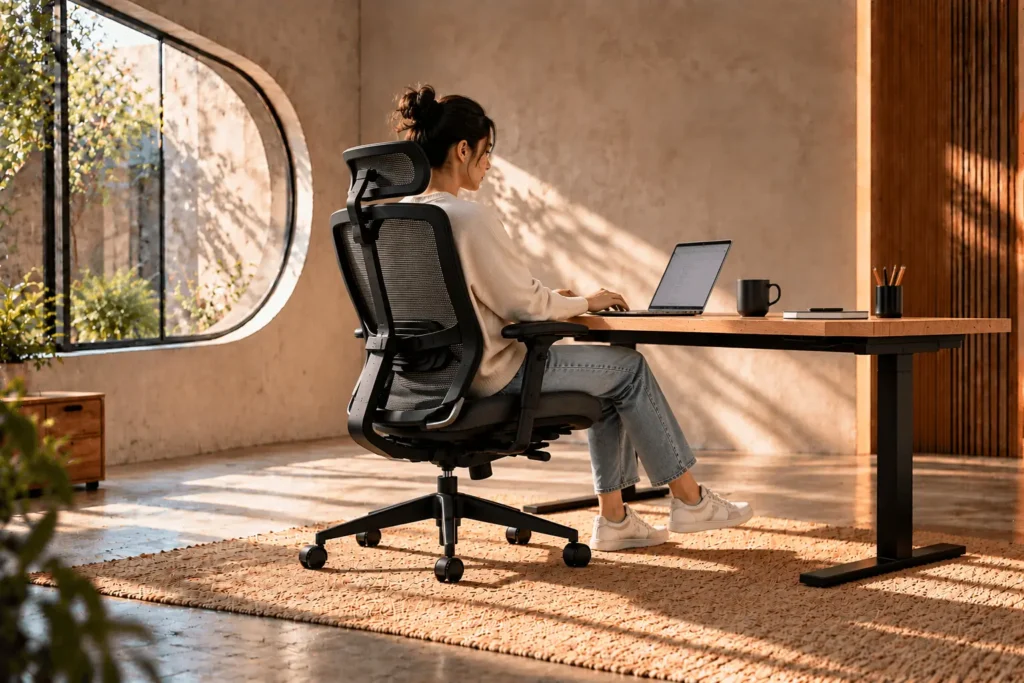
Best office chairs for short people need to fit the user rather than simply offer a lower price or a smaller-looking frame. Minimum seat height, seat depth, lumbar positioning, armrest range and desk compatibility can make a bigger difference than the number of features in the product description.
This guide focuses on the measurements and adjustments that shorter users should check before buying. Product recommendations will be added only when verified canonical Product Commerce records and current retailer offers are available.
Start with minimum seat height
A chair that cannot go low enough may leave your feet unsupported or make you compensate with your posture. Compare the actual minimum seat height with your leg length and desk setup rather than relying on a “petite” or “small” label.
OSHA: Computer Workstations — Chairs
Seat depth can make or break the fit
A deep seat can be difficult for a shorter user because sitting fully back may place too much pressure behind the knees. A shallower seat or adjustable depth can make it easier to use the backrest while keeping the legs comfortable.
Check the actual seat depth and, when available, its adjustment range. OSHA’s purchasing guidance includes adjustable seat-pan depth among useful chair considerations.
OSHA: Computer Workstations — Purchasing Guide
Lumbar support should meet your lower back
Lumbar support works best when it can reach the lower-back area without pushing the user too far forward. Height adjustment can be particularly valuable because torso length varies.
Look for the actual position and movement of the support instead of assuming a chair with the word “ergonomic” has the right geometry for you.
Armrests need a low enough range
Shorter users can struggle when armrests do not lower enough. The goal is to support the forearms while keeping the shoulders relaxed.
Also check desk clearance. If the armrests cannot slide under the desk, you may be forced to sit too far away from the keyboard.
Check the desk, not just the chair
A low chair does not automatically create a good workstation. Measure your desk height and consider keyboard and monitor position. If the desk is fixed and high, you may need to solve the workstation relationship rather than selecting a chair solely by its minimum height.
Backrest size matters too
A shorter user may find that a large backrest or fixed support position does not line up well with the torso. Where specifications are available, compare backrest dimensions and lumbar adjustment range.
Recline and seat movement
Recline can make a chair more flexible, but the mechanism should work with your body size. Check whether the backrest moves independently, whether the seat tilts and whether tension can be adjusted.
Seat width and weight rating
Shorter does not necessarily mean narrower. Evaluate seat width separately from height and depth. Also verify the manufacturer’s weight rating rather than making assumptions from the chair’s appearance.
A short-user office chair checklist
- Minimum seat height: Can your feet rest securely?
- Seat depth: Can you sit back without pressure behind the knees?
- Lumbar: Can the support reach your lower back?
- Armrests: Can they go low enough for relaxed shoulders?
- Desk: Can you get close enough to your keyboard?
- Backrest: Does the shape suit your torso?
- Recline: Can you change position comfortably?
- Warranty: Are the coverage and return terms clear?
How ChoiceKite will evaluate chairs for shorter users
ChoiceKite will prioritize published dimensions, adjustment ranges, fit analysis, buyer-focused research and verified retailer information. We will not invent ratings, test results, personal experiences or product performance claims.
When verified Product Commerce records are available, relevant products can appear beside the fit considerations they address. This keeps product discovery connected to the buyer’s actual problem instead of separating recommendations from the explanation.
Bottom line
For shorter users, start with minimum seat height and seat depth. Then check lumbar positioning, armrest range, backrest dimensions and desk compatibility. A chair that fits your proportions is more important than a chair that merely has a “small” label.
Affiliate disclosure: We may earn a small commission if you purchase through our links, at no extra cost to you.